What Constitutes a True HVAC Emergency During Avondale's Cooler Months?
When your heater won't start on a chilly October night, you need to know if it's safe to wait until morning. Learn to spot real safety hazards versus minor startup quirks.


Are you wondering What Constitutes a True HVAC Emergency During Avondale's Cooler Months? When the intense desert heat finally breaks and the first chilly October nights arrive, discovering that your heating system is unresponsive can cause immediate anxiety. You rely on your system to keep your family comfortable, and a sudden malfunction often forces a stressful decision: do you request an immediate, late-night service dispatch, or is it safe to hold off until standard business hours?
The reality is that many seemingly alarming heating issues do not actually pose a safety risk to your home or your family. In our years of keeping local homes comfortable at Tortoise Heating and Air, our team typically sees that most initial fall heating issues are just minor startup quirks rather than real dangers. Our transparent approach means we want to save you from paying unnecessary after-hours fees if your family is completely safe and the issue is merely a temporary inconvenience. Understanding the difference between a mechanical nuisance and a genuine hazard is the key to making a confident, cost-effective decision when the temperature drops.
If you need immediate help, explore our heating services or request emergency HVAC repair in Avondale right now.
During the long, brutal Arizona cooling season, your heating components sit entirely idle. When you finally switch your thermostat to "heat" for that mid-fall / October heater startup, the system has to wake up from months of dormancy. Knowing what normal operation looks like helps you establish a baseline, ensuring that true anomalies stand out immediately.
Here is what you can typically expect during the first few heating cycles of the season:
1. The prolonged idle period: Because your furnace or heat pump has not been engaged since early spring, mechanical parts like blower motors and gas valves have been completely inactive. It is perfectly normal for the system to take a moment to cycle through its safety checks before the blower engages.
2. Initial startup noises: You may hear minor clicking as electrical relays close, or a brief rattling sound as the metal ductwork expands and contracts with the sudden change in temperature. These are standard sounds of the system waking up and adjusting to thermal expansion.
3. The initial temperature lag: A system taking a few extra minutes to reach the set temperature on its very first run is typical. The ductwork in your attic or walls has cooled down, and the first wave of warm air loses some heat as it travels through these cold channels.
4. The stabilization phase: After the first complete heating cycle, the system should operate smoothly, cycling on and off at regular intervals to maintain your desired indoor temperature without excessive noise or delay.
One of the most common reasons homeowners panic during the fall transition is a sudden, noticeable odor coming from the vents. If you notice a burning smell when turning on the heater for the first time, your immediate instinct might be to assume there is a fire inside the unit. However, the science behind this odor is usually harmless.
Throughout the summer, microscopic dust particles, pet dander, and airborne debris settle on the internal heating elements and heat exchangers. When the furnace ignites for the first time in October, these settled particles are instantly incinerated. This process produces a very distinct smell of burning dust that permeates the house. This harmless odor typically dissipates within 30 to 60 minutes of continuous operation. To help you differentiate between burning dust and a true hazard, refer to the comparison below.
• Dusty / Musty Burning — Likely Cause: Summer dust baking off the heat exchanger or heating coils. — Duration: 30 to 60 minutes during the first few uses. — Required Action: Open a window to ventilate; monitor the system. No repair needed.
• Acrid / Melting Plastic — Likely Cause: Overheating electrical components, failing capacitors, or melted wire insulation. — Duration: Persistent as long as the system is running. — Required Action: Turn off the system immediately at the thermostat. Call for professional repair.
• Electrical Ozone — Likely Cause: A failing blower motor or severe electrical short circuit. — Duration: Continuous while the blower is engaged. — Required Action: Shut off power at the breaker panel. Request emergency service.
• Rotten Eggs / Sulfur — Likely Cause: A natural gas leak near the furnace or gas line. — Duration: Lingers and intensifies in the home. — Required Action: Evacuate immediately. Call the gas company and emergency services.
While many fall startup issues are harmless quirks, certain situations definitively classify as true emergencies that require immediate professional intervention. Because the Avondale AZ desert climate lacks the freezing blizzard conditions seen in other parts of the country, sudden temperature drops inside your home are rarely life-threatening. Therefore, the primary true emergencies in our region revolve around electrical and gas hazards rather than hypothermia risks.
If you encounter any of the following scenarios, you are dealing with a genuine red alert:
• Signs of a gas leak: If you detect a strong rotten egg smell (mercaptan) or hear hissing sounds near the gas valve of your furnace, this is a critical hazard. Do not turn on any light switches or attempt to shut off the furnace. Evacuate the home immediately and call your utility provider and emergency services from outside.
• Electrical hazards and sparking: If you see visible sparks, smell burning wires, or notice that your HVAC system is frequently tripping the circuit breaker, you have a severe electrical issue. A breaker that trips repeatedly is doing its job to prevent an electrical fire. Never force it to stay on.
• Carbon monoxide alarms triggering: If your carbon monoxide detectors sound their alarm while the furnace is running, you may have a cracked heat exchanger leaking deadly, odorless exhaust gases into your living space. Evacuate the home immediately.
• Complete failures with vulnerable residents: While a cold house is usually just uncomfortable, a complete heating failure can be dangerous if you have infants, elderly family members, or individuals with compromised immune systems in the home. In these specific cases, a lack of heat warrants an immediate call.
Contextualizing the urgency of heating repairs based on local weather realities is crucial for making the right call. The Avondale AZ desert climate provides a unique environment that significantly influences how you should react to a heating failure. During mid-fall and early winter, our nighttime lows typically hover in the 50s and 60s.
Understanding the local risk: While a house dropping to 60 degrees overnight will certainly cause indoor discomfort and make for a chilly morning, it rarely poses severe hypothermia risks. Furthermore, unlike homes in the Midwest or Northeast, Avondale residents do not have to worry about the threat of freezing and bursting water pipes if the furnace goes out for a few hours.
Practical alternatives to late-night calls: Because the climate is relatively mild, layering up with extra blankets, wearing warm clothing, or using a safe, localized space heater for one night is a highly practical and cost-effective alternative to a late-night service call. Differentiating between a mild inconvenience and a true health hazard allows you to rest easy, knowing you can safely address the mechanical issue during regular business hours the next day.
If you have ruled out gas leaks and electrical fires, you are likely dealing with a mechanical nuisance rather than a safety crisis. As an honest local expert, we want you to check these simple, safe items first to avoid unnecessary dispatch fees. Before deciding to bundle up and wait until morning, walk through this non-technical triage protocol that we recommend to all our Avondale customers.
1. Verify thermostat settings: It sounds overly simple, but ensure the thermostat is actually set to the "heat" position, not "cool" or "off." Verify that the target temperature is set at least three degrees higher than the current room temperature to force the system to engage.
2. Check the thermostat batteries: If the screen on your digital thermostat is blank or flashing a low-battery warning, the unit cannot communicate with the furnace. Replace the batteries with fresh ones and wait a few minutes for the system to reset.
3. Inspect the electrical panel: Locate your home's main electrical panel and check for a tripped breaker. Sometimes, a power surge can trip the HVAC circuit. If the switch is resting in the middle position, flip it completely off, then firmly back to the "on" position. Reset this breaker only once; if it trips again, leave it alone.
4. Confirm the air filter condition: A completely clogged air filter restricts vital airflow, causing the furnace's internal components to overheat. When this happens, a built-in safety limit switch will shut the system down to prevent damage, resulting in short-cycling. Pull the filter out and inspect it; if it looks like a thick blanket of dust, replace it immediately.
For more detailed tips on keeping your system running smoothly, read our guide on preventing common HVAC problems.
While checking filters and thermostats is perfectly safe, there are strict boundaries you should respect. Never open the furnace cabinet or attempt to inspect internal wiring, circuit boards, or blower motors yourself. Furthermore, do not attempt to relight a pilot light or manipulate gas valves without professional training. Modern furnaces use electronic ignitions, and tampering with gas components can create an immediate, life-threatening hazard.

Transitioning from reactive emergency triage to proactive prevention is the best way to protect your home and your peace of mind. The absolute most effective way to handle a mid-fall / October heater startup is to have the system professionally evaluated before you actually need to rely on it. Scheduling service before the first cold snap prevents surprise failures entirely.
The benefits of professional cleaning: When a technician performs seasonal maintenance, they meticulously clean the heat exchanger, burners, and blower assembly. This proactive cleaning eliminates the burning dust smell entirely, so you never have to wonder if that odor is normal or dangerous when you turn the system on.
Catching minor issues early: Routine inspections catch minor electrical wear, weakened capacitors, or slight gas valve misalignments before they escalate into late-night hazards. By identifying these weak points during standard business hours, you ensure your system operates safely and efficiently all winter long. We highly recommend booking routine HVAC maintenance well in advance of the cooler months to secure your comfort.
An HVAC emergency is any situation that poses an immediate threat to your safety or your property. This includes smelling gas, seeing electrical sparks, smelling burning plastic or ozone, or having a complete heating failure when vulnerable individuals (like infants or the elderly) are in the home. Issues that only cause mild discomfort are generally not considered emergencies.
If you notice a burning smell when turning on the heater for the first time in the fall, it is usually not dangerous. This is typically just accumulated summer dust burning off the heat exchanger and should fade within an hour. However, if the smell resembles melting plastic, burning wires, or electrical ozone, shut the system down immediately, as this indicates a dangerous electrical failure.
Yes, in most cases, a broken heater in Avondale can safely wait until morning. Because our local climate rarely experiences life-threatening freezing temperatures overnight, layering up with blankets is a safe alternative to paying for an after-hours service call, provided there are no gas or electrical hazards present.
You should call for emergency repair immediately if your carbon monoxide detectors go off, if your system is repeatedly tripping the circuit breaker, or if you smell gas. In the event of a suspected gas leak, always evacuate the home and call your utility company before contacting an HVAC technician.
The harmless burning dust smell should completely dissipate within 30 to 60 minutes of continuous heater operation. If the odor persists for several hours, grows stronger, or changes to an acrid, chemical smell, turn the system off and call for a professional inspection.
First, check your thermostat to ensure it is set to "heat" and that the fan is set to "auto" rather than "on." Next, check your air filter; a severely clogged filter can cause the furnace to overheat and shut down the burners while the fan keeps running. If these steps do not work, turn the system off and schedule a repair for the following morning.
Navigating a sudden heating issue doesn't have to be a source of panic. By understanding that true emergencies involve clear safety hazards—like gas leaks, electrical sparking, or risks to vulnerable family members—you can confidently determine when an issue can simply wait. Having a clear, no-nonsense checklist of symptoms empowers you to make practical decisions without the pressure of unnecessary after-hours fees.
If you encounter a harmless nuisance, rest easy knowing you can schedule a standard repair in the morning. But if your situation aligns with the red alerts we've discussed, prioritize your family's safety above all else. Whether you need proactive maintenance to prevent issues or immediate intervention for a true hazard, reach out to a trusted local team to restore your comfort and peace of mind.
.avif)

.avif)

.avif)
When your heater won't start on a chilly October night, you need to know if it's safe to wait until morning. Learn to spot real safety hazards versus minor startup quirks.

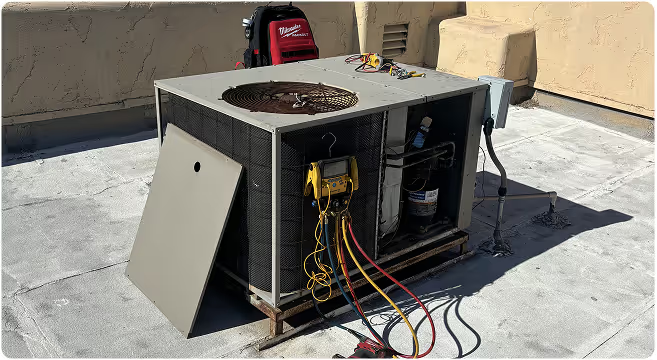
Facility managers have a brief window this fall to evaluate aging RTUs that struggled through summer. Use this framework to decide whether to repair or replace your system before the cold hits.
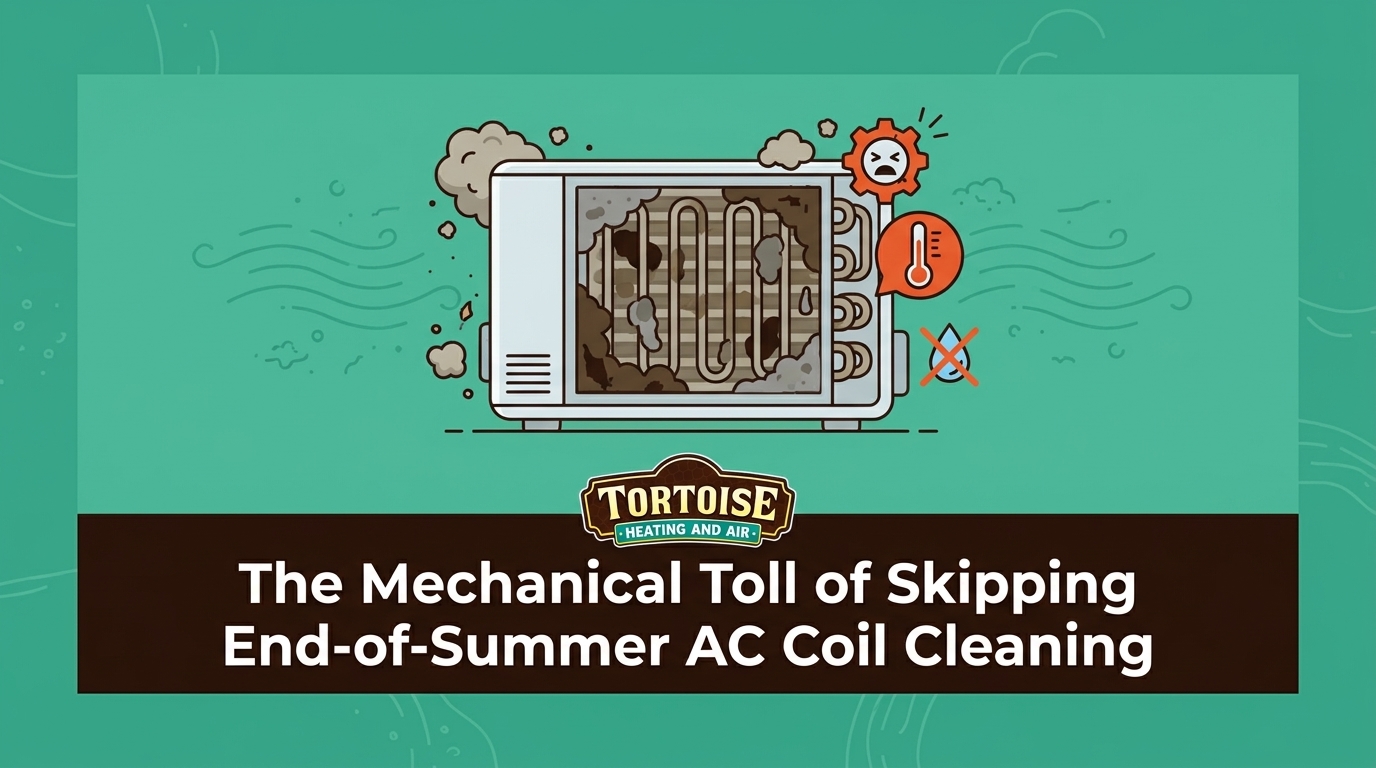
Monsoon season leaves baked-on debris coating your AC condenser. Before letting that grime sit dormant all winter, see why post-season cleaning is essential to prevent severe mechanical strain.

Turning on your heating system for the first time this fall shouldn't cause panic. Find out what causes that alarming smoky odor and how to tell a normal seasonal burn-off from a real hazard.

Get essential HVAC maintenance tips from Tortoise Heating and Air to boost comfort and efficiency in your home. Improve performance—learn more today!
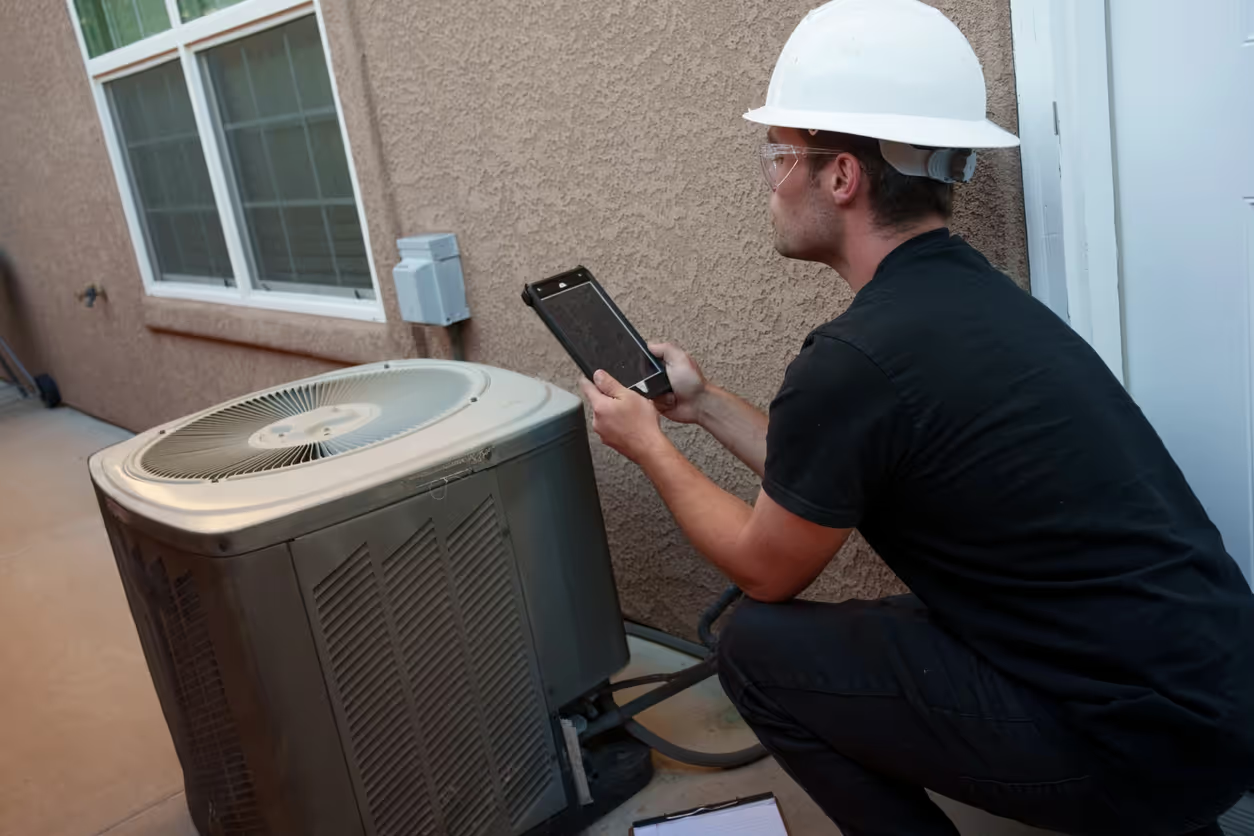
Understand common HVAC problems and keep your system running smoothly with Tortoise Heating and Air. Prevent issues year-round—learn more now!

Choosing the right HVAC system for your home is easier with Tortoise Heating and Air. Explore expert insights and key factors—learn more today!